
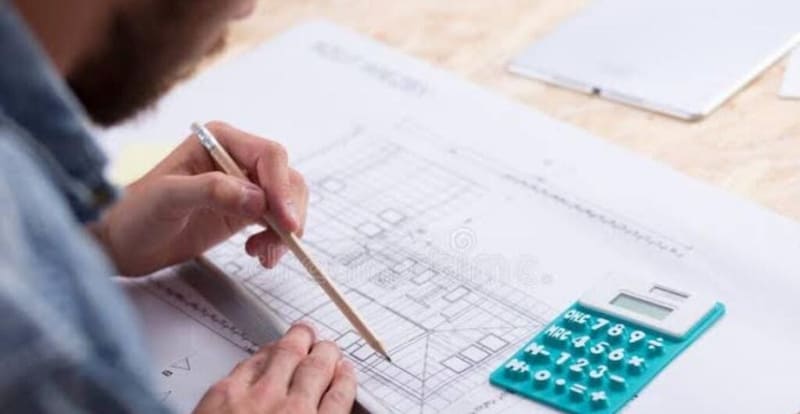
Building a new home is one of the largest financial commitments most people will make. Accurate cost estimating is essential to ensure your project stays within budget and meets your expectations. This step-by-step guide will help you understand how to estimate construction costs for a new home, whether you are working with a builder or managing the project yourself.
For a broader step-by-step method, see our guide on how to estimate new home construction costs. This article focuses specifically on line-item pricing benchmarks for the New Jersey market.
Step 1: Define Your Project Scope
Before you can estimate costs, you need a clear understanding of what you are building. Define your project scope in detail:
Home size — The total square footage of your home is the single largest cost driver. Determine the finished square footage, including all living areas, garages, and covered porches.
Number of stories — Multi-story homes typically cost less per square foot than single-story homes because they have a smaller foundation and roof area relative to living space.
Bedrooms and bathrooms — The number of bedrooms and bathrooms significantly affects costs. Each additional bathroom adds $10,000 to $25,000 to construction costs, depending on the level of finish.
Garage — Attached garages add $15,000 to $40,000 to construction costs, depending on size and finishes.
Basement — Finished basements add $30 to $75 per square foot to construction costs. Unfinished basements cost $10 to $25 per square foot.
Level of finish — The quality of materials and finishes dramatically affects costs. Builder-grade finishes cost significantly less than custom or luxury finishes.
Step 2: Understand Cost Variables
New home construction costs are affected by numerous variables beyond the basic scope:
Location — Construction costs vary significantly by region. In New Jersey, expect to pay $150 to $300 per square foot for new home construction, depending on location and level of finish. Urban areas like Bergen County and Essex County tend to have higher costs than rural areas like Sussex and Warren Counties.
Site conditions — Site conditions can significantly affect costs. Sloped lots, poor soil conditions, and the need for extensive site work add to construction costs. Waterfront properties may require specialized foundations and flood-resistant construction.
Material costs — Material costs fluctuate based on market conditions. Lumber, concrete, and steel prices can vary significantly from year to year. Your estimate should account for current market conditions and potential future increases. Current NJ pricing benchmarks are tracked in our residential estimating cost guide.
Labor costs — Labor costs vary by region and market conditions. Areas with strong union presence typically have higher labor rates. Labor availability also affects costs — tight labor markets drive up wages and extend schedules.
Permits and fees — Building permits, impact fees, and utility connection fees add to construction costs. These fees vary by municipality and can range from a few thousand dollars to tens of thousands of dollars.
Design complexity — Complex architectural designs with custom features, unusual shapes, and high-end finishes cost more than simple, straightforward designs.
Step 3: Break Down the Costs
To develop an accurate estimate, break the project into its component parts:
Site work — $5,000 to $25,000, including excavation, grading, and utility connections
Foundation — $10,000 to $40,000, depending on foundation type and site conditions
Framing — $20,000 to $60,000, depending on home size and complexity (a detailed lumber and framing takeoff validates this line item against plan quantities)
Roofing — $8,000 to $25,000, depending on roof type and complexity
Exterior finishes — $15,000 to $50,000, including siding, windows, and doors
MEP systems — $25,000 to $75,000, including HVAC, plumbing, and electrical
Interior finishes — $30,000 to $150,000, depending on level of finish
Landscaping — $5,000 to $30,000, depending on scope and site conditions
Note: These ranges are illustrative and for reference only. Actual costs vary based on project-specific conditions.
Step 4: Add Soft Costs and Contingency
In addition to construction costs, budget for soft costs and contingency:
Design and engineering — $5,000 to $25,000 for architectural and engineering services
Permits and fees — $2,000 to $15,000, depending on municipality
Utility connections — $2,000 to $10,000, depending on location and utility providers
Contingency — 10-20% of construction costs for unexpected conditions and changes
Step 5: Validate Your Estimate
Before finalizing your budget, validate your estimate:
Get multiple builder quotes — If you are working with a builder, get multiple quotes to compare costs and scope. Ensure each quote includes the same scope and specifications.
Review historical data — If you have access to historical cost data for similar projects, compare your estimate to actual costs.
Consult with professionals — An experienced estimator or construction professional can review your estimate and identify potential gaps or overestimations. If you want to see how professional quantities are built from your plans, our guide on understanding quantity takeoff walks through the process step by step.
Conclusion
Estimating construction costs for a new home requires careful planning, research, and attention to detail. By following these steps, you can develop an accurate budget that reflects the true costs of your project. Remember that estimates are predictions, not guarantees — always include contingency for unexpected costs and changes.

Apex Accuracy Estimating Inc. delivers accurate, bid-ready residential estimating for contractors across New Jersey. Upload your plans for a free quote or contact our team to discuss your next project.
Apex Accuracy Estimating
Apex Accuracy Estimating Inc. provides professional construction estimating services across New Jersey. Our team of experienced estimators delivers accurate, detailed estimates for residential, commercial, and industrial projects.
Related estimating services
Construction Estimating
Professional construction estimating services in New Jersey. Accurate cost projections, detailed quantity takeoffs, and reliable bid preparation. Get a quote today.
Lumber and Framing Estimating
Accurate lumber and framing estimating services in New Jersey. Material takeoffs and labor projections for residential and commercial projects. Get a quote.
Related articles

Send your plans. Bid tomorrow.
Upload drawings tonight — itemized CSI takeoff with labor + materials in 24–48 hours. Free quote, no obligation.
- ✓ CSI MasterFormat sheets
- ✓ NJ labor rates
- ✓ Bid-day support