
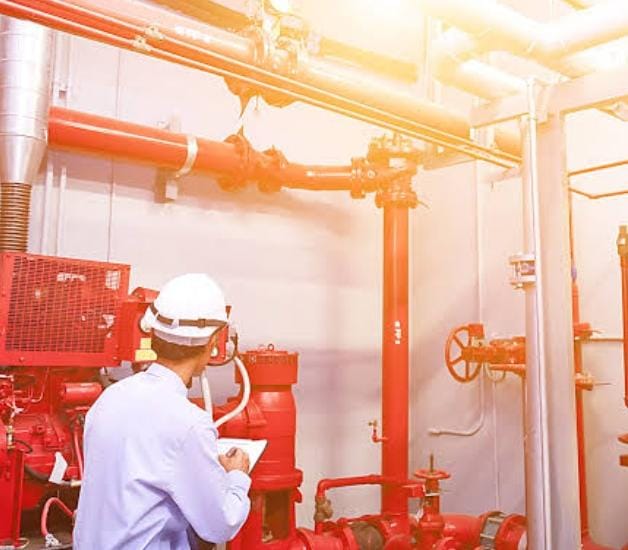
Fire stopping is a critical life safety component of commercial construction that is often overlooked in the estimating process. Proper fire stopping prevents the spread of fire and smoke through building assemblies, protecting occupants and property. Accurate fire stopping estimating is essential for both building safety and project budgeting. This guide covers everything you need to know about estimating fire stopping for building safety.
What Is Fire Stopping?
Fire stopping refers to the materials and systems used to seal openings and joints in fire-resistance-rated building assemblies. These systems maintain the fire resistance rating of walls, floors, and ceilings by preventing the passage of flames, smoke, and hot gases through penetrations and joints.
Fire stopping is required wherever penetrations pass through fire-resistance-rated assemblies, including:
- Pipe and duct penetrations — Where mechanical and electrical systems pass through fire-rated walls and floors
- Cable and conduit penetrations — Where electrical and data systems pass through fire-rated assemblies
- Joint seals — Where fire-rated assemblies meet other building elements
- Expansion joints — Where building movement joints cross fire-rated assemblies
- Curtain wall perimeter — Where exterior curtain walls meet floor assemblies
Understanding Fire Stopping Codes and Standards
Fire stopping is governed by building codes and standards that specify where and how fire stopping must be installed.
International Building Code (IBC) — The IBC requires fire stopping of penetrations and joints in fire-resistance-rated assemblies. The code references ASTM E814 and UL 1479 for fire stopping system testing and performance.
International Fire Code (IFC) — The IFC requires maintenance of fire stopping systems and mandates that damaged or missing fire stopping be repaired or replaced.
NFPA codes — Various NFPA codes, including NFPA 101 (Life Safety Code) and NFPA 70 (National Electrical Code), include fire stopping requirements.
Local amendments — Many jurisdictions have local code amendments that affect fire stopping requirements. In New Jersey, the state building code adopts the IBC with amendments that may affect fire stopping specifications — requirements that vary across Bergen County, Essex County, and other counties statewide.
Types of Fire Stopping Systems
Different applications require different fire stopping systems. Understanding these systems is essential for accurate estimating.
Intumescent fire stop sealants — These sealants expand when exposed to heat, sealing penetrations and joints. They are used for pipe and cable penetrations and are the most common fire stopping material.
Fire stop pillows and putty — These removable fire stopping devices are used for openings that require frequent access, such as data centers and electrical rooms.
Fire stop collars — Intumescent collars are installed around plastic pipes to seal penetrations in the event of fire.
Fire stop mortar — Cementitious fire stop compounds are used for large penetrations and openings.
Fire stop boards — Mineral fiber boards are used for large openings and are often used in conjunction with other fire stopping materials. Because these boards share properties with thermal products, the same takeoff discipline applies as in our insulation estimating services.
Smoke seals — In addition to fire stopping, many assemblies require smoke seals to prevent the passage of smoke. Smoke seals may be separate from or integrated with fire stopping systems.
Estimating Fire Stopping Costs
Estimating fire stopping requires identifying all penetrations and joints that require fire stopping and applying appropriate material and labor costs. For regional benchmarks, our construction estimating rates for New Jersey outline typical unit pricing you can start from.
Identify all penetrations — Review mechanical, electrical, and plumbing drawings to identify all penetrations through fire-rated assemblies. Count penetrations by type and size.
Determine fire stopping systems — Based on the penetration type and the fire rating of the assembly, determine the appropriate fire stopping system. Consult the manufacturer’s listings and code requirements.
Calculate material quantities — Calculate the material quantities required for each fire stopping application. This includes sealant, collars, pillows, and accessories. A disciplined material takeoff service keeps these counts consistent across drawings.
Apply labor rates — Fire stopping labor varies by application type. Simple sealant applications are faster than complex multi-component systems. Apply appropriate labor rates based on the complexity of each application, or review our labor cost estimating approach for productivity benchmarks.
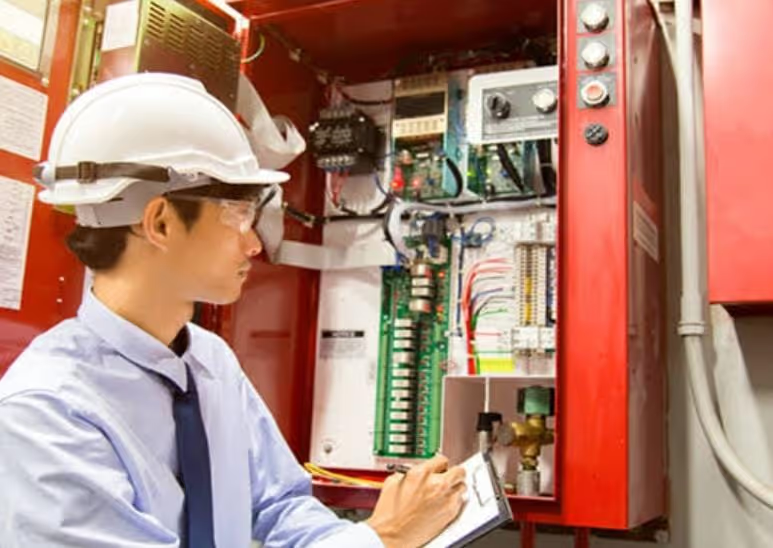
Include testing and inspection — Some jurisdictions require fire stopping inspection and testing. Include these costs in your estimate, along with related life-safety scopes such as the ones covered by our fire alarm estimating services.
Common Fire Stopping Estimating Mistakes
Missing penetrations — The most common fire stopping estimating mistake is missing penetrations. Use a systematic approach to identify all penetrations through fire-rated assemblies.
Incorrect system selection — Using the wrong fire stopping system for an application can result in code violations and costly rework. Ensure you understand the code requirements for each application.
Underestimating labor — Fire stopping labor is often underestimated, particularly for complex installations or hard-to-reach locations. Be realistic about labor hours.
Ignoring access requirements — Fire stopping in hard-to-reach locations — above ceilings, in mechanical rooms, or at high elevations — requires additional labor and equipment. Account for these requirements in your estimate.
Forgetting smoke seals — Smoke seals are often required in addition to fire stopping. Ensure your estimate includes both fire stopping and smoke sealing where required.
Conclusion
Fire stopping is a critical life safety component that requires careful attention in the estimating process. By understanding fire stopping systems, code requirements, and estimation methods, you can develop accurate estimates that ensure both building safety and project budget compliance. Remember that fire stopping is not an area to cut corners — proper fire stopping saves lives and protects property.
Apex Accuracy Estimating Inc. provides fire-stopping and life-safety estimating services for contractors across New Jersey. Upload your plans for a free quote or contact our team to discuss your next project.
Apex Accuracy Estimating
Apex Accuracy Estimating Inc. provides professional construction estimating services across New Jersey. Our team of experienced estimators delivers accurate, detailed estimates for residential, commercial, and industrial projects.
Related estimating services
Fire Alarm Estimating
NFPA-72 fire alarm estimating in New Jersey. Device counts, wiring, panel programming and testing budgets for commercial projects. Get a quote.
Insulation Estimating
Accurate insulation estimating services in New Jersey. Fiberglass, spray foam, and rigid board cost projections. Request a quote today.
Related articles
Send your plans. Bid tomorrow.
Upload drawings tonight — itemized CSI takeoff with labor + materials in 24–48 hours. Free quote, no obligation.
- ✓ CSI MasterFormat sheets
- ✓ NJ labor rates
- ✓ Bid-day support